
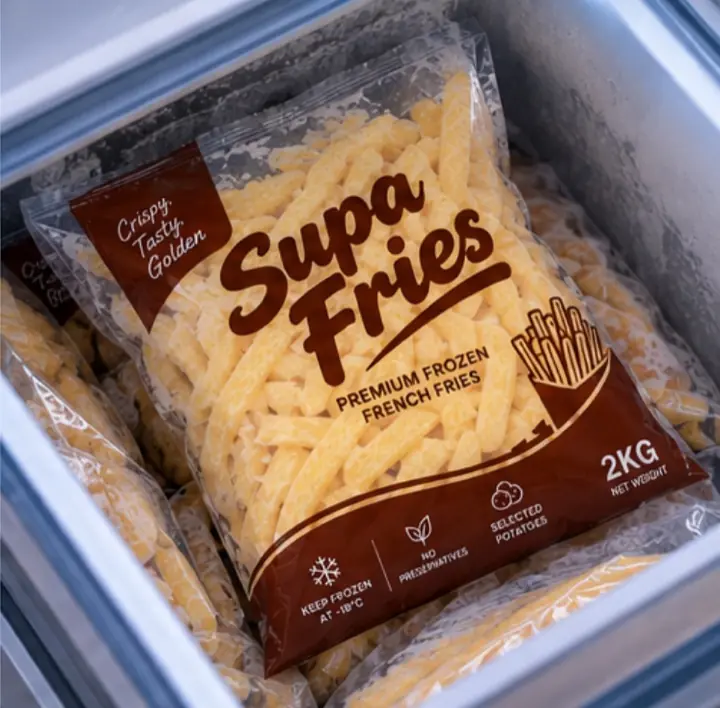
Picture two kitchens on the same street. In the first, someone has been peeling potatoes since 7 am, with buckets of cut chips soaking by the sink. In the second, the cook opens a pack from the freezer five minutes before the first order. Both serve chips at lunch. Which one is doing it right? The honest answer depends on what you care about most, and the details may surprise you.
Below we compare frozen fries and fresh-cut chips on taste, time, cost, waste, oil and consistency, so you can decide what works for your kitchen.
How do frozen fries and fresh-cut chips compare?
| Frozen fries | Fresh-cut chips | |
|---|---|---|
| Prep time | None. Straight from freezer to fryer | Washing, peeling, cutting and soaking |
| Cooking time | About 3 minutes at 175°C | Usually longer, and often fried twice |
| Consistency | Same size and colour every batch | Depends on the potatoes and the cook |
| Waste | Cook only what you need | Peels, offcuts and potatoes that spoil |
| Storage | Up to 12 months at −18°C | A few weeks in a cool, dark place |
| Price per kilo | Higher | Lower |
| Best for | Busy homes, restaurants, hotels, chips spots | Cooks with time and cheap, steady potato supply |
Do frozen fries taste different from fresh chips?
Good frozen fries taste like well-made fresh chips: crisp outside, soft and fluffy inside. The difference usually comes from the potato and how the fries were prepared, not from freezing. Fries cut from firm, starchy potatoes and frozen soon after harvest keep their flavour well.
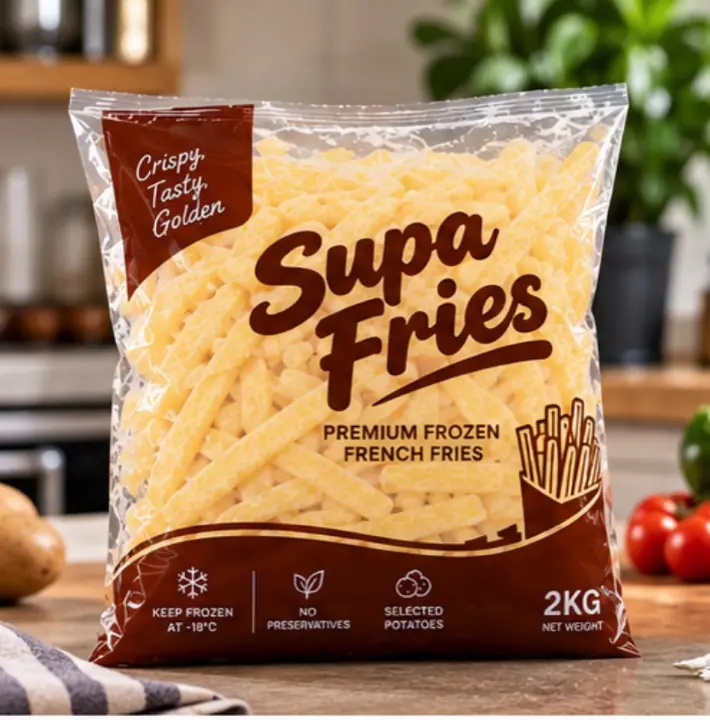
Where frozen fries often win is texture. Hand-cut chips vary in thickness, so some burn while others stay pale. Frozen fries are cut by machine to the same size, so the whole batch cooks evenly. Supa Fries are cut from potatoes grown in Tanzania's Southern Highlands, then prepared and frozen in Dar es Salaam.
How much time do frozen fries save?
A lot. Fresh chips mean washing, peeling, cutting, rinsing and drying before anything goes in the oil. For a home cook that is 20 to 30 minutes per meal. For a busy restaurant, preparing a sack of potatoes can take one person an hour or more every day.
With frozen fries, all of that is done before the pack reaches you. You open the bag, fill the basket and fry. That frees staff for cooking and serving, and means you can start service without a morning of prep.
Peeled, cut and ready to cook from frozen in about 3 minutes. No preservatives.
Order on WhatsAppAre frozen fries cheaper than fresh chips?
Per kilo, raw potatoes are cheaper. But the price on the sack is not the cost on the plate. When you make fresh chips you also pay for:
- Peeling loss: peel and offcuts are weight you paid for but cannot serve.
- Spoilage: potatoes go soft, sprout or rot in the heat, especially in Dar es Salaam.
- Labour: the hours spent peeling and cutting every day.
- Water and oil: washing and soaking use water, and longer frying uses more oil.
Add those up and frozen fries often cost about the same per plate, or less. For businesses, the bigger win is predictable cost: you know exactly how many portions a pack gives you. See our full breakdown of why kitchens switch.
Which gives a more consistent result?
Frozen fries, clearly. Fresh potatoes change through the year. Some batches have more sugar and brown too fast; others have more water and go limp. Even the best cook gets uneven chips from uneven potatoes.
Frozen fries are sorted and cut the same way every time, so the 100th plate looks like the first. For a restaurant or chips spot, that consistency is what builds regular customers.
Should you choose frozen fries or fresh chips?
- Choose frozen fries if you want chips fast, cook often, run a food business, or hate wasting potatoes.
- Choose fresh-cut chips if you have plenty of time, cheap labour and a reliable supply of good frying potatoes, and only cook chips now and then.
Ready to try? Here is how to cook frozen fries in a deep fryer, air fryer or oven.
In short
For most homes and food businesses, good frozen fries are the better choice: they taste just as good as fresh-cut chips, cook in about 3 minutes, come out the same every time and waste almost nothing. Fresh-cut chips can be cheaper per kilo if you have time, cheap labour and a steady supply of good potatoes, but they take far longer to prepare and are harder to get right batch after batch.
Frequently asked questions
Are frozen fries as good as fresh chips?
Yes, when they are made from good potatoes and cooked properly. Good frozen fries are cut from fresh potatoes and frozen soon after, so they fry up crisp outside and fluffy inside, often more evenly than hand-cut chips.
Are frozen fries cheaper than fresh potatoes?
Per kilo, raw potatoes usually cost less. But once you count peeling loss, staff time, water, spoiled potatoes and extra oil, frozen fries often work out the same or cheaper per plate, especially for restaurants.
Do frozen fries have preservatives?
Not always. Freezing itself keeps fries fresh. Supa Fries contain no preservatives. Check the pack of any brand you buy.
How long do frozen fries last?
Kept at −18°C in a sealed pack, frozen fries usually last up to 12 months. Once thawed, cook them the same day and do not refreeze.
Why do restaurants use frozen fries?
Because they save hours of prep, cook in about 3 minutes, and come out the same size and colour every time. That consistency means customers get the same plate they enjoyed last time.
Try premium frozen fries
Found this useful? Share it.