

Stand in the cooking oil aisle of any Tanzanian supermarket and you will see a wall of bottles: sunflower, palm, groundnut, vegetable blends. Prices differ, labels say different things, and most people just grab the cheapest. But the oil in your pan affects how crisp your chips are, how they taste, how long the oil lasts and even your health. Here is how to choose with confidence.
In Tanzania, most homes and chips vendors choose between sunflower oil and palm olein, mainly on price. Here is how the common options compare, and how to choose.
Which oil is best for deep frying chips?
The figures below are typical values for refined oils. Smoke point is the temperature at which an oil starts to smoke and break down. It varies by brand and quality, so treat these as a guide.
| Oil | Smoke point (approx.) | Taste | Best for |
|---|---|---|---|
| Refined sunflower | About 230°C | Neutral | Homes and restaurants, good all-rounder |
| Palm olein | About 230°C | Neutral | Busy chips spots: stable and lasts long |
| Groundnut (peanut) | About 230°C | Light, slightly nutty | Very crisp chips, but watch for allergies |
| Soybean | About 230°C | Neutral | General frying, often in vegetable oil blends |
| Refined coconut | About 230°C | Mild | Occasional use; unrefined coconut smokes at about 175°C |
| Extra virgin olive | About 190 to 210°C | Strong | Not ideal for deep frying chips; costly |
You can read more about why oils smoke at different temperatures on Wikipedia's smoke point page.

Is sunflower oil good for frying chips?
Yes. Refined sunflower oil is one of the best choices for home cooks. It has a high smoke point, a clean taste and is easy to find in Tanzania, where sunflower is grown in regions such as Singida and Dodoma. Choose refined sunflower oil for deep frying. Cold-pressed (unrefined) sunflower oil has more flavour but a lower smoke point.
Is palm oil good for frying chips?
Palm olein (the liquid part of palm oil) is popular with chips vendors because it is stable at high heat and holds up well over many batches. It gives a crisp, dry finish. It is higher in saturated fat than sunflower or groundnut oil, so many families prefer sunflower at home and keep palm olein for busy commercial fryers.
How do you choose the right frying oil?
- For homes: refined sunflower oil. Neutral, healthy profile, easy to find.
- For busy chips spots and restaurants: palm olein or a quality vegetable oil blend, because it lasts more batches before it needs changing.
- For the crispiest chips: groundnut oil, if none of your customers have a peanut allergy. Tell customers when you use it.
- Avoid mixing old and new oil. Old oil speeds up the breakdown of fresh oil.
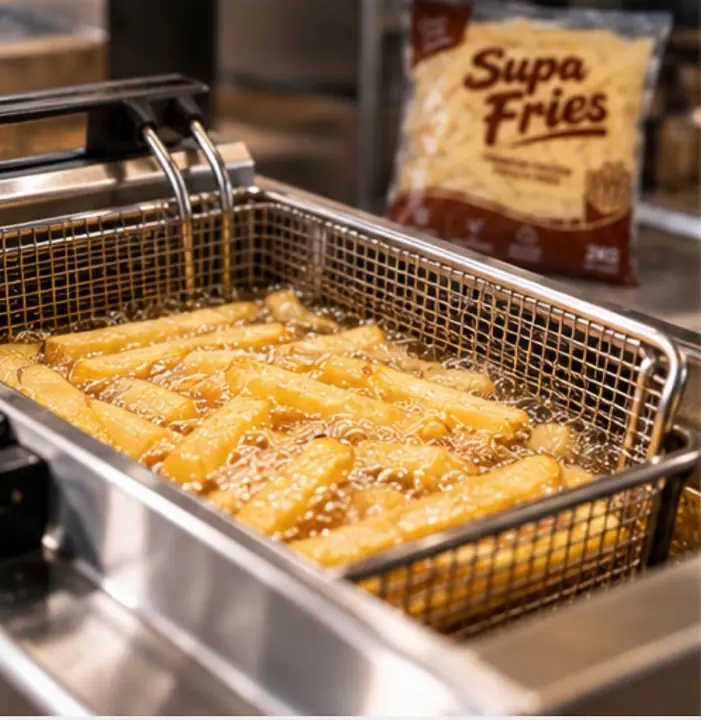
What temperature should the oil be for chips?
For frozen fries, heat the oil to 175°C and fry for about 3 minutes until golden. Oil that is too cool makes greasy, soft chips; oil that is too hot browns the outside before the inside is cooked. Our full guide to cooking frozen fries has times for every method, and our tips on making fries less oily help you get the most from your oil.
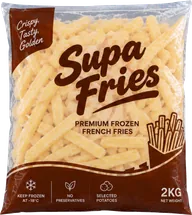
Supa Fries are straight-cut 10 to 12 mm, so they cook evenly in any good frying oil in about 3 minutes.
Order on WhatsAppGood oil lasts longer when you look after it. See how often to change frying oil for the warning signs.
What is the difference between refined and unrefined oil?
Refined oils have been filtered and treated to remove tiny particles, free fatty acids and strong flavours. This raises their smoke point and makes them more stable in hot oil, which is why almost all good frying oils are refined. Unrefined or cold-pressed oils keep more of the natural taste, colour and some nutrients of the seed or nut, but those same particles burn and break down at high heat.
A simple rule: use unrefined oils for salads, dressings and gentle cooking, and refined oils for deep frying. If the label does not say, look at the colour. Refined oils are usually pale and clear; unrefined oils are darker, cloudier and smell more strongly of the seed.
How do you read a cooking oil label?
- "Refined" or "for frying": suitable for deep frying chips.
- "Cold-pressed", "virgin" or "unrefined": better for low-heat cooking.
- "Vegetable oil": usually a blend of soybean, palm, sunflower or other oils. Often fine for frying; check that it is refined.
- "Palm olein": the liquid fraction of palm oil, made for frying.
- Fat breakdown: lower saturated fat is generally better for everyday home use.
- Best before date and seal: oil goes rancid over time, especially in heat and light. Buy sealed bottles and use within the date.
Which oil gives the best value for a chips business?
The cheapest oil per litre is not always the cheapest per plate. What matters is how many plates you can fry before the oil needs changing, and how much oil the chips absorb. A more stable oil that lasts five days can cost less in a month than a cheaper oil that has to be thrown out after two. To compare oils fairly:
- Buy one container of each oil you want to test.
- Fry with each for a week, keeping your normal habits (175°C, daily filtering).
- Write down how many days each lasted and how many plates you sold.
- Divide the cost of the oil by the plates sold. That is your oil cost per plate.
Our chips cost per plate guide shows how oil fits into the full cost of a plate.
How should you store cooking oil?
- Keep it cool and dark. Heat and sunlight speed up rancidity. Do not store oil next to the stove or in a sunny window.
- Close the lid tightly. Air also breaks oil down.
- Keep used oil separate from fresh oil, in a clean covered container, after straining it.
- Smell before you use it. Rancid oil smells sharp, like old paint or crayons. Throw it out.
Which oil is healthiest for everyday frying?
Health bodies generally advise choosing oils lower in saturated fat, such as sunflower, soybean and groundnut, for everyday cooking, and limiting total fat. The WHO's healthy diet guidance recommends that saturated fat makes up less than 10 percent of total energy intake. But the biggest health factor with chips is not which oil you choose; it is how much oil ends up in the chips and how often you eat them. Frying at the right temperature and draining well cut oil absorption a lot. For lower-oil options, see air fryer vs deep fryer.
Can you fry chips and fish in the same oil?
It is best not to. Fish flavours the oil, so chips fried afterwards taste of fish, and coatings break the oil down faster. Keep a separate pot or fryer for fish, or fry chips first and fish last, then change the oil.
Whatever oil you choose, the habits matter most: refined oil, 175°C, small batches, daily filtering and changing it before it turns dark. Get those right and almost any good frying oil will give you crisp, golden chips that taste clean, batch after batch. Pair it with even-cut frozen fries and every plate comes out the same.
In short
The best oils for frying chips are refined oils with a high smoke point and a neutral taste: refined sunflower oil, palm olein, groundnut (peanut) oil and soybean oil. They stay stable at the 175°C you need for crispy fries and do not flavour the potato. Unrefined oils and extra virgin olive oil are less suited to deep frying because they smoke and break down sooner.
- Use refined oils with a high smoke point for deep frying.
- Refined sunflower oil is a great all-rounder for homes.
- Palm olein lasts long in busy commercial fryers.
- Keep oil at 175°C and change it when it darkens.
Frequently asked questions
What is the healthiest oil to fry chips in?
Refined sunflower, groundnut and soybean oils are lower in saturated fat than palm oil and still stable at frying temperature. Whatever you use, do not let it smoke and change it when it gets dark.
Can I use olive oil to fry chips?
You can, but extra virgin olive oil is expensive, has a strong taste and a lower smoke point. Light or refined olive oil is better if you want to use olive oil.
Which oil makes the crispiest chips?
Groundnut (peanut) oil and palm olein both give very crisp chips. Oil temperature matters more than the oil itself: keep it at about 175°C.
Can I mix two different cooking oils?
Yes, fresh oils can be mixed, and many vegetable oils sold are blends. Do not top up old, dark oil with fresh oil, as the old oil makes the new oil break down faster.
Is palm oil bad for frying chips?
Palm olein is stable at high heat and lasts a long time in the fryer, which is why many vendors use it. It is higher in saturated fat than sunflower or groundnut oil, so many families prefer those at home.
Can I reuse oil after frying chips?
Yes. Oil used only for chips can usually be reused 6 to 8 times at home if you strain it after each use. Change it when it darkens, foams or smokes.
Which oil do chips spots in Tanzania use?
Most use refined sunflower oil, palm olein or a vegetable oil blend, chosen mainly on price and how long the oil lasts in the fryer.
Get Supa Fries delivered
Found this useful? Share it.