
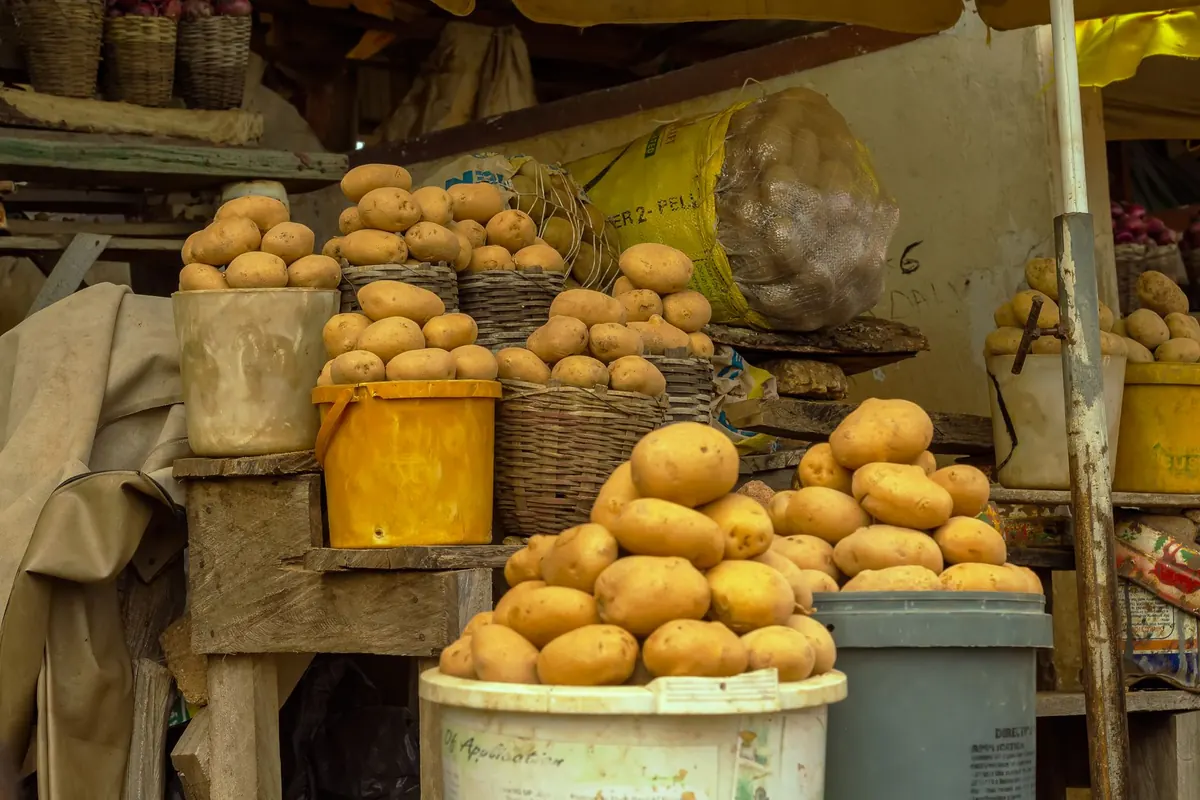
Two sacks of potatoes sit side by side at Mwenge market. Same price, same size, same red dust from the highlands. One will give you golden chips that stay crisp for ten minutes. The other will give you soft, dark, oily chips that customers leave on the plate. From the outside, you cannot always tell which is which. But there are ways to stack the odds in your favour.
The best potatoes for french fries are mature, firm potatoes with high starch (also called high dry matter) and low natural sugar. They make chips that are crisp outside, fluffy inside and evenly golden. In Tanzania, good frying potatoes mostly come from the cool highlands, especially the Southern Highlands. Choose firm, smooth potatoes with no green patches, sprouts or soft spots, store them somewhere cool and dark (not the fridge), and test-fry a few chips from every new sack. Here is what makes a potato good for chips and how to choose.
What makes a potato good for fries?
Potatoes are mostly water, starch and a little sugar. For chips, you want:
- High starch, lower water (high dry matter). Starchy potatoes give a fluffy inside and absorb less oil. Watery potatoes give soft, heavy, oily chips.
- Low natural sugar. Too much sugar makes chips brown too fast and taste bitter. See why fries go too dark.
- Long, even shape. Long potatoes give long chips with less waste.
- Firm flesh, no damage. Bruises and rot show up as dark spots after frying.
Research on potato processing agrees that varieties with high dry matter are preferred for chips and crisps. In practice, many Tanzanian cooks describe good chip potatoes as ones that are "dry" and "floury" when cooked, rather than waxy.
Waxy vs starchy potatoes: what is the difference?
| Type | Texture when cooked | Best for |
|---|---|---|
| Starchy (high dry matter) | Fluffy, dry, breaks apart easily | Chips, roast potatoes, mash |
| All-purpose | In between | Most home cooking |
| Waxy (low dry matter) | Firm, holds shape, moist | Stews, salads, boiling |
Waxy potatoes are not bad; they are great in a stew or potato salad. They just make softer, heavier chips.

Which potatoes grow well in Tanzania?
Most of Tanzania's Irish potatoes grow in the cool highlands, especially the Southern Highlands around Mbeya, Njombe and Iringa, with two harvests a year in many areas thanks to the rainfall pattern. Other growing areas include the north around Arusha and Kilimanjaro, and Lushoto in Tanga. Farmers grow many varieties, from older local favourites to newer certified seed. Government seed agencies and partners have tested new varieties to raise yields and quality.
Variety names at the market are not always reliable, so it is better to judge potatoes by their quality than by their name. The International Potato Center, which works with African farmers on better seed, has more on the crop. Read more about the region in why Southern Highlands potatoes make great fries.
How do you choose potatoes at the market?
- Feel them. Choose firm potatoes. Soft or wrinkled ones are old or have lost water.
- Look for green. Green patches mean the potato was exposed to light and contains solanine, which tastes bitter and should be cut away. Avoid sacks with lots of green.
- Check for sprouts. Sprouting potatoes are older and often have more sugar.
- Look inside a sack if you can. Ask the seller to open one and check the middle and bottom, where rotten potatoes hide.
- Prefer medium to large, long potatoes. They give longer chips and less peeling waste.
- Ask when they were harvested. Mature potatoes from a recent harvest are usually best.
- Ask how they were stored. Potatoes kept in a cold room may fry dark.

What simple tests can you do at home or in the kitchen?
The test fry. This is the most reliable test. Cut five or six chips from a few different potatoes in the sack, fry them at about 175°C and look at the colour, crunch and inside. If they brown fast or come out soft and greasy, think twice before buying more of that batch.
The salt water test. Starchy potatoes are denser than watery ones. Put potatoes in a bucket of strongly salted water: the ones that sink tend to have more dry matter, while the ones that float tend to be more watery. It is a rough guide, but useful when comparing sacks.
The cut test. Cut a potato in half and rub the halves together. A starchy potato often leaves a white, slightly sticky film. A very wet, shiny cut surface suggests a waxier potato.
How should you store potatoes for frying?
- Cool, dark and airy. A shaded store room or a ventilated crate works well.
- Not in the fridge. Fridge-cold potatoes turn starch into sugar and fry dark.
- Away from light, to prevent greening.
- Off the floor, on pallets or shelves, so air can move.
- Away from onions, which can make potatoes sprout faster.
- Check weekly and remove any rotting potatoes before they spoil the rest.

How do you prepare potatoes for chips at home?
Peel (or leave the skin on for rustic chips), then cut into even sticks about 10 to 12 mm thick. Rinse in cold water to remove surface starch. Many home cooks then blanch the chips briefly in hot water with a little salt and vinegar, dry them well and fry. If you want to make your own frozen chips, our guide on how to make frozen fries at home shows the full method: blanch with salt and vinegar, dry, freeze on a tray, then pack.
The key steps for crispy results are even cuts, dry chips and hot oil. See 9 tips for crispy chips.
What should restaurants know about buying potatoes?
For a restaurant or chips spot, potato quality changes from sack to sack and season to season. Some weeks you get great chips; other weeks they brown too fast or go soft. Peeling and cutting also takes hours every morning, and a good share of each sack ends up as peel, offcuts and rotten potatoes. That is why many kitchens either buy from one trusted supplier and test every batch, or switch to frozen fries made from potatoes selected for frying. Compare both in frozen fries vs fresh-cut chips.
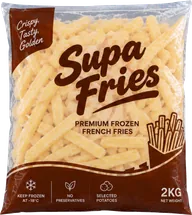
Supa Fries are cut from Southern Highlands potatoes selected for chips, so every batch fries golden and fluffy without the sack-to-sack surprises.
Ask for wholesale prices
What makes a good chip potato, at a glance?
| Look for | Avoid |
|---|---|
| Firm, smooth skin | Soft, wrinkled potatoes |
| No green patches | Green skin or flesh |
| No sprouts | Sprouting potatoes |
| Long, medium to large | Very small or misshapen potatoes |
| Floury, dry texture when cooked | Very waxy, wet flesh |
| Stored cool and dark | Fridge or cold-room storage |
Back at Mwenge market, the cook who knows these tricks picks up a potato, presses it, checks for green, asks the seller where it came from and how long ago it was harvested. Then she buys a small amount first and test-fries it at home. It takes ten extra minutes, and it saves her a week of disappointing chips.
In short
The best potatoes for french fries are mature, firm, starchy potatoes (high dry matter) with low natural sugar, which give crisp outsides, fluffy insides and even golden colour. In Tanzania they mostly come from the cool highlands, especially the Southern Highlands. Choose firm potatoes without green patches, sprouts or soft spots, store them cool, dark and airy but never in the fridge, and test-fry a few chips from each new sack before cooking in bulk.
Frequently asked questions
What type of potato is best for french fries?
Starchy potatoes with high dry matter and low sugar. They give fluffy insides, crisp outsides and absorb less oil than waxy potatoes.
Where do the best potatoes for chips come from in Tanzania?
Mostly from the cool highlands, especially the Southern Highlands around Mbeya, Njombe and Iringa, as well as the north and Lushoto.
Why are my homemade chips soggy?
Often because the potatoes are waxy or watery, the chips were not dried, or the oil was too cool. Use starchy potatoes, dry them well and fry at about 175°C.
Should I store potatoes in the fridge?
No. Cold storage turns starch into sugar, which makes chips brown too fast. Store potatoes somewhere cool, dark and airy.
Are green potatoes safe for chips?
Cut away green parts, which contain bitter solanine. Avoid potatoes that are very green throughout.
How can I test if a potato is good for frying?
The best test is to fry a few chips at about 175°C and check the colour and texture. A salt water test can also show which potatoes are denser and starchier.
Put better chips on your menu
Found this useful? Share it.